

How are medical face masks tested for quality?
As a supplier of Medical Face Masks, ensuring the quality of our products is of utmost importance. In this blog, I will delve into the various testing methods used to guarantee that our medical face masks meet the highest standards of quality and safety.
Filtration Efficiency Testing
One of the most critical aspects of a medical face mask is its filtration efficiency. This refers to the mask's ability to filter out particles of various sizes, including bacteria and viruses. To test the filtration efficiency of our Medical Face Mask, we use specialized equipment that measures the percentage of particles blocked by the mask material.
We typically test for two types of particles: non - oily particles and oily particles. Non - oily particles are commonly used to simulate airborne dust, pollen, and some bacteria. Oily particles, on the other hand, are used to represent aerosols that may contain viruses or other harmful substances.
The test involves passing a known concentration of particles through the mask material and measuring the concentration of particles that pass through. The difference between the initial and final particle concentrations is used to calculate the filtration efficiency. For medical face masks, a high filtration efficiency is required, especially for masks designed for use in healthcare settings.
Bacterial Filtration Efficiency (BFE) Testing
Bacterial Filtration Efficiency testing is specifically designed to measure the mask's ability to filter out bacteria. In this test, a suspension of bacteria is aerosolized and passed through the mask material. The bacteria that pass through the mask are then collected and counted.
The BFE is calculated as the percentage of bacteria filtered by the mask. For medical face masks, a BFE of at least 95% is often required. This ensures that the mask can effectively prevent the spread of bacteria from the wearer to the environment or vice versa. Our Medical Disposable Face Mask undergoes rigorous BFE testing to meet the industry standards.
Pressure Differential Testing
Pressure differential testing measures the resistance of the mask to air flow. When a person breathes through a mask, there should be a certain amount of resistance, but it should not be too high to cause discomfort or difficulty in breathing.
During the test, air is forced through the mask at a specific flow rate, and the pressure difference across the mask is measured. A lower pressure differential indicates that the mask allows for easier air flow. However, it is important to strike a balance between low resistance and high filtration efficiency. Our Medical Protection Face Mask is designed to provide a comfortable breathing experience while maintaining high filtration performance.
Flammability Testing
Flammability testing is crucial to ensure that the mask does not pose a fire hazard. In this test, a small flame is applied to the edge of the mask material for a specified period. The mask is then evaluated based on its ability to self - extinguish and the extent of burning.
Medical face masks must meet certain flammability standards to be safe for use. Our masks are tested to ensure that they do not continue to burn after the flame is removed and that the burning does not spread beyond a certain limit.
Tensile Strength Testing
Tensile strength testing measures the mask's ability to withstand stretching and pulling forces. A strong mask is less likely to tear or break during use, which is important for maintaining its integrity and effectiveness.
During the test, a sample of the mask material is clamped at both ends and gradually pulled until it breaks. The maximum force applied before breaking is recorded as the tensile strength. Our masks are made from high - quality materials with sufficient tensile strength to ensure durability.
Fit Testing
Fit testing is essential to ensure that the mask provides a proper seal around the face. A well - fitting mask can prevent air leakage, which is crucial for effective filtration.
There are several methods for fit testing, including qualitative and quantitative methods. Qualitative fit testing involves the use of a test agent, such as a bitter - tasting aerosol, to determine if there is any leakage around the mask. If the wearer can taste the test agent, it indicates that the mask does not fit properly.
Quantitative fit testing, on the other hand, uses specialized equipment to measure the actual amount of leakage around the mask. This method provides more accurate results but is more complex and expensive. We conduct fit testing on our masks to ensure that they can provide a secure and comfortable fit for a wide range of face shapes and sizes.
Biocompatibility Testing
Biocompatibility testing is performed to ensure that the mask materials are safe for contact with the skin. This includes testing for irritation, sensitization, and cytotoxicity.
Irritation testing involves applying the mask material to the skin of test animals or human volunteers and observing for any signs of redness, swelling, or other adverse reactions. Sensitization testing checks if the material can cause an allergic reaction over time. Cytotoxicity testing evaluates the effect of the mask material on living cells.
Our masks are made from materials that have been thoroughly tested for biocompatibility to ensure that they do not cause any harm to the wearer's skin.
Conclusion
As a supplier of medical face masks, we are committed to providing high - quality products that meet the strictest standards of safety and performance. Through a comprehensive range of testing methods, including filtration efficiency, BFE, pressure differential, flammability, tensile strength, fit, and biocompatibility testing, we ensure that our masks are reliable and effective.
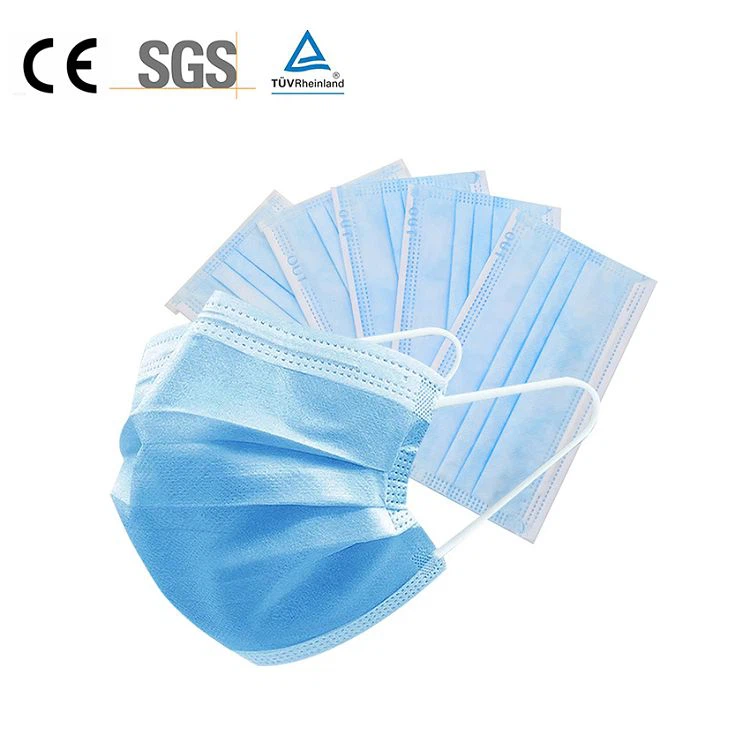

If you are interested in purchasing our medical face masks for your organization, whether it is a healthcare facility, a business, or any other entity in need of reliable respiratory protection, we invite you to reach out to us for a detailed discussion. We can provide you with more information about our products, testing procedures, and pricing. Let's work together to ensure the health and safety of your employees and customers.
References
- American Society for Testing and Materials (ASTM). Standards for medical face masks.
- Centers for Disease Control and Prevention (CDC). Guidelines for mask use in healthcare settings.
- World Health Organization (WHO). Recommendations for respiratory protection in healthcare.