

What is the filtration efficiency of CE medical face masks?
Hey there! As a supplier of CE medical face masks, I often get asked about the filtration efficiency of these masks. It's a super important topic, especially in the current health - conscious world we live in. So, let's dive right in and explore what filtration efficiency really means when it comes to CE medical face masks.
What is Filtration Efficiency?
Filtration efficiency refers to the ability of a face mask to filter out particles from the air that you breathe. In simple terms, it tells you how well a mask can block those tiny nasties like bacteria, viruses, and dust. When we talk about CE medical face masks, their filtration efficiency is measured against certain standards.
The CE mark on a medical face mask indicates that the product meets the essential health and safety requirements set by the European Union. For filtration efficiency, these masks are typically tested to see how well they can filter particles of different sizes. The most common size of particles that are of concern in the medical field are those around 0.3 microns in diameter. This is because many viruses and bacteria are in this size range.
How is Filtration Efficiency Tested?
There are specific tests used to determine the filtration efficiency of CE medical face masks. One of the most well - known is the ASTM F2100 standard, although the EU also has its own set of testing protocols.
In these tests, a sample of the mask material is exposed to a stream of particles of a known size and concentration. The air that passes through the mask is then analyzed to see how many particles were blocked by the mask. The result is expressed as a percentage. For example, if a mask has a filtration efficiency of 95% for 0.3 - micron particles, it means that 95% of the 0.3 - micron particles in the test air were blocked by the mask.
Filtration Efficiency of Different Types of CE Medical Face Masks
Let's take a look at some of the common types of CE medical face masks and their typical filtration efficiencies.
- Medical Face Mask: These are the most basic type of medical face masks. They usually have a filtration efficiency of around 90% for particles in the 0.3 - micron range. They are designed to protect the wearer from large droplets and splashes, and also to prevent the wearer from spreading their own respiratory droplets. You can check out more about Medical Face Mask.
- Medical Protection Face Mask: These masks offer a higher level of protection. They often have a filtration efficiency of 95% or more for 0.3 - micron particles. They are used in more high - risk medical settings where there is a greater chance of exposure to infectious agents. If you're interested in this type of mask, head over to Medical Protection Face Mask.
- Medical Disposable Face Mask: As the name suggests, these are single - use masks. Their filtration efficiency can vary, but it's generally in the range of 90 - 95% for 0.3 - micron particles. They are very popular because they are cost - effective and convenient. You can find more details about Medical Disposable Face Mask.
Factors Affecting Filtration Efficiency
There are several factors that can affect the filtration efficiency of CE medical face masks.
- Fit: A mask that fits poorly will have a lower filtration efficiency. If there are gaps between the mask and the face, particles can easily bypass the mask material. That's why it's important to choose a mask that fits properly and to adjust the straps to ensure a snug fit.
- Material: The quality of the mask material plays a huge role. High - quality materials are designed to have better filtration properties. For example, masks made with non - woven fabrics that have been specially treated are more likely to have a higher filtration efficiency.
- Usage Time: Over time, the filtration efficiency of a mask can decrease. As the mask gets dirty or wet, it becomes less effective at blocking particles. That's why it's recommended to replace disposable masks regularly.
Why Filtration Efficiency Matters
In a medical setting, the filtration efficiency of a face mask can mean the difference between preventing the spread of an infection and not. For healthcare workers, wearing a mask with a high filtration efficiency is crucial to protect themselves and their patients.
In the general public, a mask with good filtration efficiency can also help reduce the risk of getting sick. Even if you're just going to the grocery store or running errands, wearing a mask with a decent filtration efficiency can provide an extra layer of protection against airborne particles.
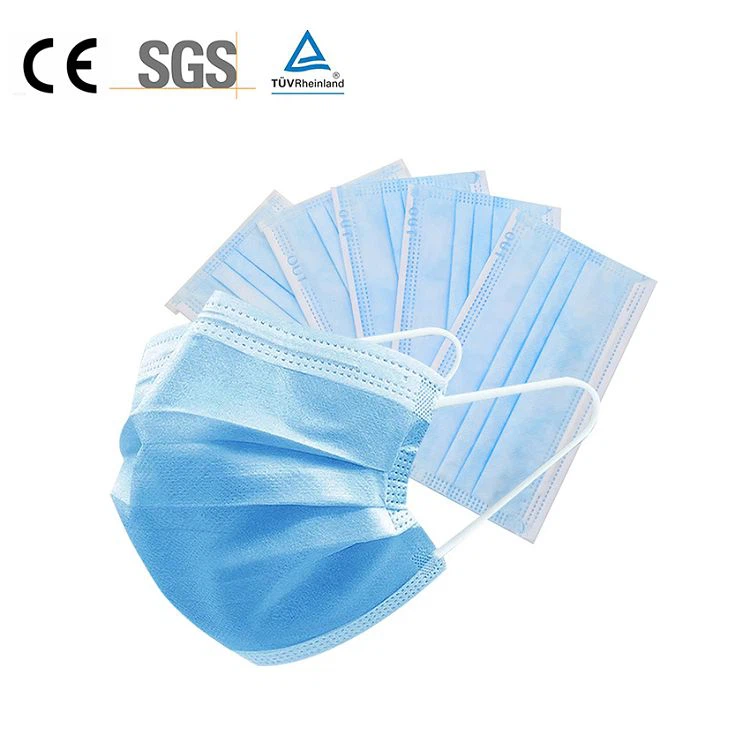

Our CE Medical Face Masks
As a supplier, we take great pride in the quality of our CE medical face masks. We ensure that all our masks are tested to meet the highest standards of filtration efficiency. Our manufacturing process is carefully monitored to guarantee that each mask provides the level of protection it's supposed to.
Whether you're a hospital looking to stock up on medical protection face masks or an individual looking for a reliable disposable mask, we've got you covered. Our masks are made from high - quality materials and are designed to fit comfortably.
Contact Us for Procurement
If you're interested in purchasing our CE medical face masks, we'd love to hear from you. We can offer competitive prices and reliable delivery. Whether you need a small quantity for personal use or a large order for a medical facility, we're ready to assist you. Just reach out to start the procurement process and let's discuss how we can meet your needs.
References
- ASTM International. (2021). ASTM F2100 - 19 Standard Specification for Performance of Materials Used in Medical Face Masks.
- European Union Medical Device Regulation (MDR) 2017/745.