

What is the impact of temperature on CE medical face masks?
Hey there! I'm a supplier of CE medical face masks, and today I wanna talk about how temperature can impact these essential pieces of safety equipment.
Let's start with the basics. CE medical face masks are designed to protect us from various contaminants, like bacteria and viruses. They go through strict testing to meet the CE standards, which ensure a certain level of quality and performance. But temperature can throw a bit of a wrench into that performance.
Impact of High Temperatures
When it comes to high temperatures, things can get a little dicey for CE medical face masks. First off, the materials that make up these masks can start to break down. Most masks are made of non - woven fabrics and elastic bands. High heat can cause the fibers in the non - woven fabric to weaken. You know, it's like when you leave a plastic toy in the hot sun for too long, and it becomes brittle.
The elastic bands are also at risk. Heat can make them lose their elasticity. You've probably noticed this with other elastic things in your life. Maybe an old hair tie that just doesn't snap back like it used to after being left in a hot car. In the case of face masks, if the elastic bands lose their stretch, the mask won't fit properly on your face. And a poorly fitting mask is a lot less effective at protecting you.
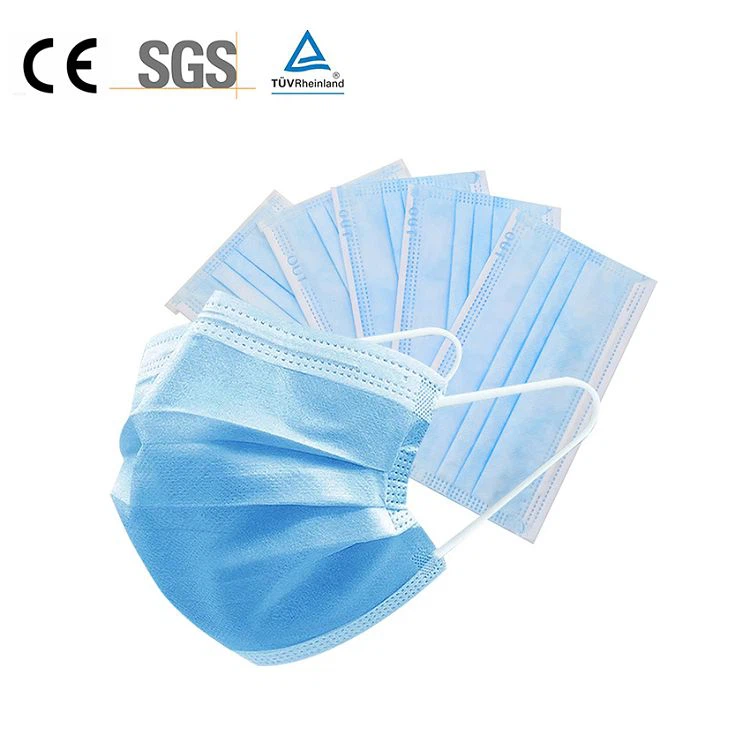

Another issue with high temperatures is that they can affect the electrostatic charge of the mask. Many CE medical face masks rely on an electrostatic charge to attract and trap small particles. But high heat can dissipate this charge. It's a bit like a battery losing its power. Once the electrostatic charge is gone, the mask's ability to filter out tiny particles, like viruses, goes down the drain.
For us suppliers, high temperatures can be a real headache during transportation and storage. If the masks are exposed to extreme heat during shipping, say in a truck without proper temperature control, we might end up with a batch of masks that don't meet the quality standards. And that's not good for anyone, whether it's us as suppliers or the customers who are counting on these masks for protection.
Impact of Low Temperatures
Now, let's talk about the cold. Low temperatures can also have an impact on CE medical face masks. One of the main problems is that cold can make the materials of the mask more rigid. The non - woven fabric can become stiff, and the elastic bands can lose some of their flexibility. It's like when you take a rubber ball out in the snow, and it becomes hard and less bouncy.
When the mask materials are rigid, it can be uncomfortable to wear. You might find it harder to mold the mask to your face, which means there could be gaps around the edges. And those gaps are like little highways for contaminants to get in.
In addition, extreme cold can cause condensation inside the mask. If you've ever gone outside on a really cold day and noticed your breath fogging up your glasses, you know what I'm talking about. Inside a mask, this condensation can make the mask wet. A wet mask is not only uncomfortable but also less effective at filtering particles. Moisture can break down the fibers in the mask and reduce its filtration efficiency.
As a supplier, we have to be extra careful when shipping masks to cold regions. We need to make sure they're properly packaged to protect them from the cold. Otherwise, we could face complaints from customers about uncomfortable or ineffective masks.
Testing and Quality Control
At our company, we take temperature impacts very seriously. We conduct a lot of tests to make sure our CE medical face masks can withstand different temperature conditions. We put the masks through simulated high - and low - temperature environments to see how they hold up.
For example, we use special chambers where we can control the temperature and humidity. We'll expose the masks to high temperatures for a certain period and then check for any signs of material degradation, like changes in the fabric's strength or the elastic's stretch. We also test the filtration efficiency before and after the temperature exposure to see if it's been affected.
On the low - temperature side, we do similar tests. We want to make sure the masks remain comfortable to wear and effective at filtering particles even in cold conditions. By doing these tests, we can ensure that the masks we supply meet the high standards that our customers expect.
Our Product Range
We offer a wide range of CE medical face masks, including Medical Face Mask, Medical Protection Face Mask, and Medical Disposable Face Mask. Each of these masks is designed with high - quality materials and goes through rigorous quality control to ensure they perform well in various temperature conditions.
Whether you're in a hot climate or a cold one, our masks are built to protect you. We understand that different regions have different temperature challenges, and we've engineered our masks to handle them.
Conclusion and Call to Action
In conclusion, temperature can have a significant impact on CE medical face masks. High temperatures can weaken the materials and reduce the electrostatic charge, while low temperatures can make the masks rigid and cause condensation. But don't worry! As a trusted supplier, we've got you covered.
Our masks are tested and designed to withstand a wide range of temperatures. We're committed to providing you with the highest - quality CE medical face masks that offer reliable protection no matter the weather.
If you're interested in purchasing our CE medical face masks, whether it's for personal use, a business, or an organization, we'd love to hear from you. Reach out to us to start a discussion about your specific needs. We can offer you competitive prices, excellent customer service, and masks that meet the strictest CE standards.
References
- "The Effect of Temperature on the Physical Properties of Non - Woven Fabrics", Journal of Textile Science
- "Temperature and Humidity Impact on Respiratory Protective Devices", International Journal of Occupational Safety and Health