

Are medical face masks breathable?
In the era of heightened health awareness and the ever - present threat of infectious diseases, medical face masks have become an essential part of our daily lives. As a supplier of high - quality Medical Face Mask, I am often asked about the breathability of these masks. This question is of utmost importance, as breathability directly affects the comfort and usability of the masks, which in turn impacts people's willingness to wear them consistently.
The Science Behind Breathability
Breathability in medical face masks is a complex concept that involves multiple factors. At its core, breathability refers to the ability of the mask material to allow air to pass through while still providing an adequate level of filtration. The mask needs to strike a balance between keeping harmful particles out and enabling the wearer to breathe easily.
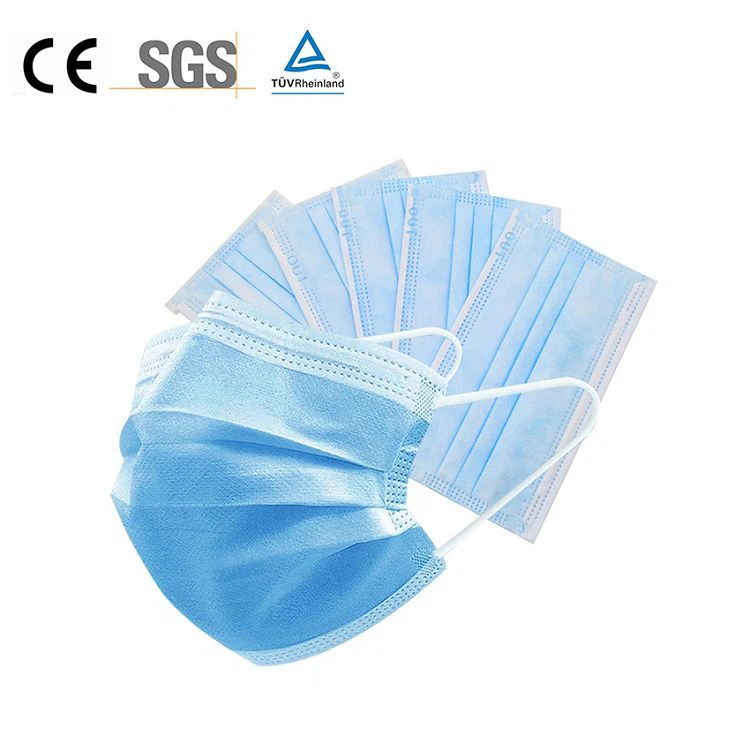
Most medical face masks are made up of multiple layers of non - woven fabric. These layers are designed to perform different functions. The outer layer is usually water - repellent, which helps to prevent splashes and droplets from reaching the inner layers. The middle layer is the filtration layer, which traps harmful particles such as viruses and bacteria. The inner layer is soft and comfortable against the skin, often made of a material that absorbs moisture from the wearer's breath.
The breathability of a mask is determined by the porosity of these layers. Porosity refers to the number and size of the tiny holes or pores in the fabric. A mask with high porosity will allow more air to pass through, making it more breathable. However, if the pores are too large, the mask will not be able to filter out small particles effectively. On the other hand, a mask with very small pores will provide better filtration but may be less breathable.
Measuring Breathability
To quantify the breathability of medical face masks, several methods are commonly used. One of the most widely used metrics is the air permeability. Air permeability is measured in cubic feet per minute (CFM) or liters per square meter per second (L/m²/s). It represents the volume of air that can pass through a unit area of the mask material under a specific pressure difference.
Another important parameter is the pressure drop across the mask. When a person breathes through a mask, there is a certain resistance to the airflow, which causes a pressure difference between the inside and outside of the mask. A lower pressure drop indicates better breathability, as it means that the wearer does not have to work as hard to breathe.
In addition to these physical measurements, subjective evaluations are also important. People's perception of breathability can vary depending on factors such as the fit of the mask, the duration of wear, and individual breathing patterns. For example, a mask that feels breathable during short - term use may become uncomfortable after wearing it for several hours.
Factors Affecting Breathability
Several factors can affect the breathability of medical face masks. One of the most significant factors is the material of the mask. Different types of non - woven fabrics have different porosities and air permeabilities. For example, polypropylene is a commonly used material in medical face masks due to its good filtration properties and relatively high breathability.
The design of the mask also plays a crucial role. Masks with a looser fit generally allow more air to circulate around the edges, which can improve breathability. However, a loose - fitting mask may also reduce the effectiveness of filtration, as it allows unfiltered air to enter from the sides. On the other hand, a well - fitting mask that seals around the nose and mouth can provide better protection but may feel less breathable.

The humidity and temperature of the environment can also impact breathability. In hot and humid conditions, the moisture from the wearer's breath can accumulate inside the mask, making it feel stuffy and reducing breathability. Similarly, wearing multiple layers of clothing or engaging in strenuous physical activity can increase the amount of moisture and heat inside the mask, further affecting comfort.
Our Company's Approach to Breathability
As a supplier of Medical Face Mask, we understand the importance of breathability. We are committed to providing masks that offer a high level of protection without sacrificing comfort.
We use advanced manufacturing techniques to optimize the porosity of our mask materials. Our research and development team continuously tests different fabric combinations to find the perfect balance between filtration efficiency and breathability. We also pay close attention to the design of our masks, ensuring that they fit well without being too tight.
Our Medical Disposable Face Mask is designed with a soft inner layer that absorbs moisture quickly, keeping the wearer's face dry and comfortable. The outer layer is water - repellent, providing protection against splashes and droplets. The middle filtration layer is made of high - quality non - woven fabric that can effectively trap harmful particles while still allowing air to pass through.
In addition, our Medical Protection Face Mask is engineered to have a low pressure drop, which means that it is easy to breathe through. We conduct rigorous quality control tests to ensure that all our masks meet or exceed industry standards for breathability and filtration.
Conclusion
Breathability is a critical factor in the design and use of medical face masks. A breathable mask can improve the comfort and usability of the mask, which is essential for ensuring that people wear them consistently. At our company, we are dedicated to providing high - quality medical face masks that offer excellent breathability without compromising on protection.
If you are interested in our products or have any questions about the breathability of our medical face masks, we encourage you to contact us for procurement discussions. We look forward to working with you to meet your needs for reliable and comfortable face masks.
References
- ASTM International. (2021). Standard Specification for Performance of Materials Used in Medical Face Masks. ASTM F2100 - 21.
- European Committee for Standardization. (2019). EN 14683:2019+ A1:2019. Medical face masks - Requirements and test methods.
- World Health Organization. (2020). Advice on the use of masks in the context of COVID - 19.