

Do CE - marked medical masks have a high filtration efficiency?
Hey there! As a supplier of CE - marked medical masks, I often get asked whether these masks have a high filtration efficiency. So, I thought I'd take some time to break it down for you.
First off, let's understand what the CE mark means. The CE mark is a certification that indicates a product complies with European health, safety, and environmental protection standards. For medical masks, it's a sign that the mask has gone through a series of tests to meet certain quality and safety requirements. But does that automatically mean high filtration efficiency? Well, it's a bit more complicated than that.
Medical masks come in different types, and each type has its own level of filtration efficiency. There are Medical Face Mask, Medical Disposable Face Mask, and Medical Protection Face Mask.
The basic medical face mask, like the ones you might find in a doctor's office, usually has a lower filtration efficiency compared to more specialized masks. These masks are mainly designed to protect others from the wearer's respiratory droplets. They can filter out large particles, but when it comes to smaller ones, like fine dust or some viruses, their performance isn't as great.
On the other hand, medical disposable face masks are a step up. They are designed to be used once and then thrown away, which helps maintain their effectiveness. These masks often have a better filtration rate for small particles. They are commonly used in healthcare settings where there's a risk of exposure to infectious agents.
The medical protection face mask is the top - tier option. These masks are engineered to provide a high level of filtration. They are often tested to filter out a high percentage of airborne particles, including very small ones. In fact, some medical protection face masks can filter out up to 95% or more of particles as small as 0.3 microns. That's pretty impressive!
Now, how do we measure filtration efficiency? There are several methods, but one of the most common is the Particle Filtration Efficiency (PFE) test. In this test, the mask is exposed to a stream of particles of a specific size, and the percentage of particles that are filtered out is measured. A higher PFE means better filtration.
Another important factor is the Bacterial Filtration Efficiency (BFE) test. This test measures the mask's ability to filter out bacteria. Since many respiratory diseases are caused by bacteria, a high BFE is crucial for medical masks.
When it comes to CE - marked medical masks, the European standards set minimum requirements for both PFE and BFE. For example, a CE - marked medical mask must have a BFE of at least 95%. This ensures that the mask can effectively protect against bacterial infections.

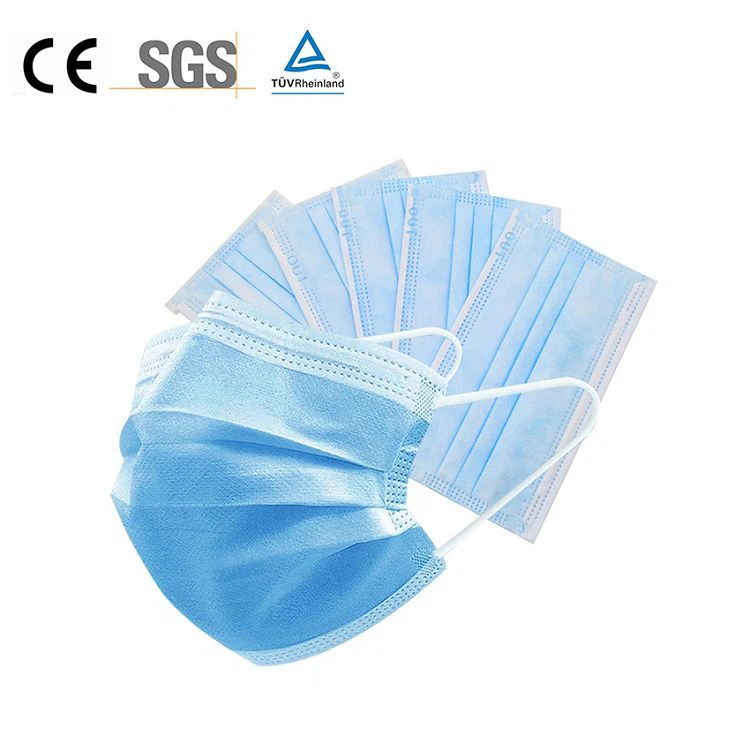
But here's the thing: just because a mask has a CE mark doesn't mean it's the best in terms of filtration efficiency. There can be a wide range of performance even among CE - marked masks. Some manufacturers may produce masks that just meet the minimum requirements, while others go above and beyond.
As a supplier, I always make sure to source masks from manufacturers who prioritize high - quality materials and strict production processes. We test the masks ourselves to ensure that they not only meet but exceed the CE standards. This way, we can guarantee that our customers are getting masks with excellent filtration efficiency.
One of the key factors in filtration efficiency is the material used in the mask. High - quality non - woven fabrics are commonly used because they have good filtration properties. The number of layers in the mask also matters. A multi - layer mask is usually more effective at filtering particles than a single - layer one.
The fit of the mask is another crucial aspect. Even the best - filtering mask won't work well if it doesn't fit properly. A mask that is too loose will allow particles to leak in around the edges. That's why many medical masks are designed with adjustable straps and nose clips to ensure a snug fit.
In addition to filtration efficiency, there are other things to consider when choosing a medical mask. Breathability is important, especially if the mask is going to be worn for a long time. A mask that is difficult to breathe through can be uncomfortable and may even lead to people not wearing it correctly.
Also, the comfort of the mask, such as the softness of the material against the skin and the lack of irritation, is a big factor. No one wants to wear a mask that feels scratchy or causes their skin to break out.
So, to answer the question “Do CE - marked medical masks have a high filtration efficiency?” The answer is: it depends. While CE - marked masks meet certain minimum standards for filtration, the actual efficiency can vary. But if you choose a reliable supplier, like us, you can get CE - marked masks with excellent filtration performance.
If you're in the market for medical masks, whether it's for a healthcare facility, a business, or personal use, I encourage you to get in touch with us. We can provide you with detailed information about the masks we offer, including their filtration efficiency, material, and comfort features. We're always happy to have a chat and help you find the right masks for your needs.
References
- European Union Medical Device Regulations
- Standards for Particle Filtration Efficiency and Bacterial Filtration Efficiency testing methods