

How do medical face masks protect against whooping cough?
Whooping cough, also known as pertussis, is a highly contagious respiratory disease caused by the bacterium Bordetella pertussis. It is characterized by severe coughing fits that can make it difficult to breathe, and in some cases, it can lead to serious complications, especially in infants and young children. In the fight against whooping cough, medical face masks play a crucial role. As a supplier of Medical Face Mask, I am well - versed in how these masks can provide protection against this infectious disease.
Understanding Whooping Cough Transmission
Before delving into how medical face masks protect against whooping cough, it's important to understand how the disease spreads. Whooping cough is spread through droplets produced when an infected person coughs or sneezes. These droplets can travel through the air and be inhaled by people in close proximity. The bacteria in these droplets can then infect the respiratory tract of the new host, leading to the development of the disease.
How Medical Face Masks Work
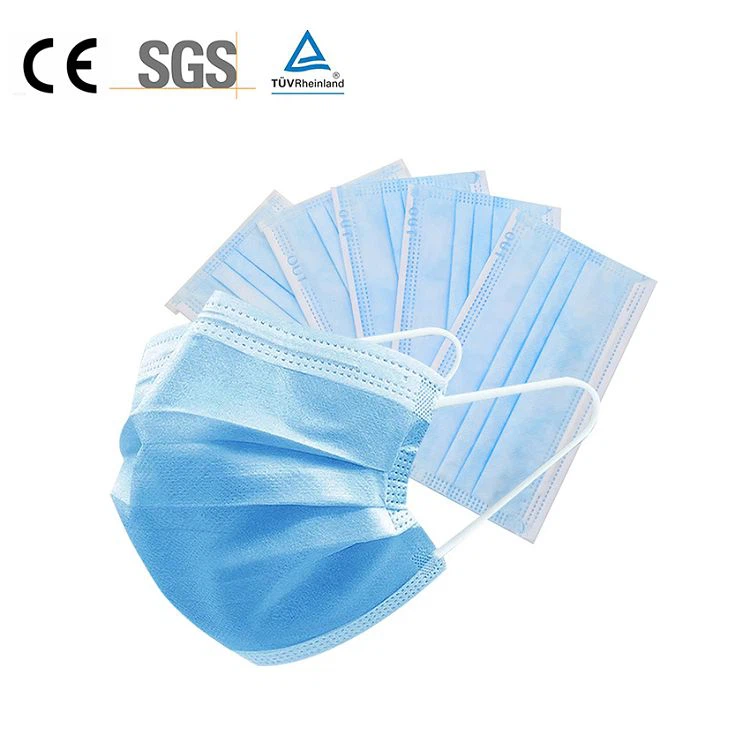
Medical face masks are designed to act as a physical barrier between the wearer and the surrounding environment. They are typically made of multiple layers of non - woven fabric, each layer serving a specific purpose.
The outermost layer of a Medical Disposable Face Mask is usually water - repellent. This layer helps to prevent large droplets, such as those produced during a cough or sneeze, from penetrating the mask and reaching the wearer's face. When an infected person coughs or sneezes, the water - repellent layer of the mask on the infected individual can capture a significant portion of the large droplets, reducing the amount of bacteria that is released into the air.
The middle layer of the mask is the filtration layer. This layer is responsible for trapping smaller particles, including the bacteria that cause whooping cough. The filtration efficiency of medical face masks is an important factor in their effectiveness. High - quality medical masks can filter out a large percentage of particles in the size range of the Bordetella pertussis bacteria. The fibers in the filtration layer are arranged in a way that creates a tortuous path for the particles, increasing the likelihood of them being trapped.
The innermost layer of the mask is often a soft, absorbent layer that is in contact with the wearer's face. This layer helps to absorb moisture from the wearer's breath, making the mask more comfortable to wear for extended periods. It also prevents the moisture from condensing on the inside of the mask, which could potentially affect the mask's filtration efficiency.
Protection for Infected Individuals
When an individual is infected with whooping cough, wearing a medical face mask can significantly reduce the spread of the disease. As mentioned earlier, the water - repellent outer layer of the mask can capture large droplets produced during coughing fits. By containing these droplets, the mask reduces the number of bacteria that are released into the air, thereby decreasing the risk of infecting others.
In a healthcare setting, for example, patients with whooping cough are often required to wear medical face masks. This helps to prevent the spread of the disease within the hospital environment, protecting other patients, healthcare workers, and visitors. Even in non - healthcare settings, such as schools or public transportation, an infected person wearing a mask can limit the spread of the bacteria to those around them.
Protection for Healthy Individuals
Healthy individuals can also benefit from wearing medical face masks to protect against whooping cough. When in an environment where there is a risk of exposure to the disease, such as in a household where a family member has whooping cough or in a community with an outbreak, wearing a Medical Protection Face Mask can act as a preventive measure.
The mask's filtration layer can trap the bacteria - laden droplets in the air before they are inhaled by the wearer. By reducing the amount of bacteria that enters the respiratory tract, the mask lowers the risk of infection. However, it's important to note that wearing a mask is not a substitute for vaccination. Vaccination is still the most effective way to prevent whooping cough, but masks can provide an additional layer of protection.

Factors Affecting Mask Effectiveness
Several factors can affect the effectiveness of medical face masks in protecting against whooping cough. One of the most important factors is proper fit. A mask that does not fit properly around the nose and mouth can allow air to leak in and out, reducing its ability to filter out particles. It's essential to choose a mask that is the right size for the wearer and to ensure that it is worn correctly, with the nose clip properly adjusted to fit snugly over the nose.
The duration of mask use also matters. Medical face masks are designed for single - use or limited - use. Over time, the mask can become saturated with moisture and particles, which can reduce its filtration efficiency. It's important to replace the mask regularly, especially if it becomes wet or dirty.
The quality of the mask is another crucial factor. Not all medical face masks are created equal. High - quality masks that meet relevant standards, such as ASTM or EN standards, are more likely to provide effective protection. As a supplier, I ensure that the medical face masks I offer meet strict quality control measures to guarantee their performance.
The Role of Masks in Community Prevention
In a community setting, widespread use of medical face masks can have a significant impact on the spread of whooping cough. During an outbreak, if a large proportion of the population wears masks, it can create a "community immunity" effect. Even if some individuals are not fully protected by the mask, the overall reduction in the spread of the bacteria can help to slow down the outbreak.
Schools, for example, can implement mask - wearing policies during whooping cough outbreaks. This can help to protect students, teachers, and staff. Similarly, in workplaces where there is a risk of exposure, such as healthcare facilities or daycare centers, encouraging mask use can be an effective preventive measure.
Conclusion
Medical face masks are an important tool in the fight against whooping cough. They work by acting as a physical barrier to prevent the spread of the Bordetella pertussis bacteria. Whether worn by infected individuals to prevent transmission or by healthy individuals to reduce the risk of infection, these masks can play a significant role in controlling the spread of the disease.
As a supplier of high - quality medical face masks, I am committed to providing products that meet the highest standards of quality and performance. Our masks are designed to offer effective protection against whooping cough and other respiratory diseases. If you are interested in purchasing medical face masks for your organization, whether it's a healthcare facility, a school, or a business, I encourage you to contact us for more information and to discuss your specific needs. We are ready to work with you to ensure that you have the right masks to protect your community from whooping cough and other infectious diseases.
References
- Centers for Disease Control and Prevention. (2023). Whooping Cough (Pertussis). Retrieved from [CDC website].
- World Health Organization. (2023). Medical Masks: Use in the Community, in Health - Care Settings, and during Home Care. Retrieved from [WHO website].
- European Centre for Disease Prevention and Control. (2023). Pertussis in the EU/EEA. Retrieved from [ECDC website].