

How many layers do CE medical face masks usually have?
As a supplier of CE medical face masks, I often get asked about the number of layers these masks usually have. In this blog post, I'll delve into the typical layer configurations of CE medical face masks, explain the function of each layer, and provide insights into how these layers contribute to the mask's overall performance.
Understanding CE Medical Face Masks
CE medical face masks are designed to meet specific European standards (CE marking) for medical use. They are commonly used in healthcare settings to protect both the wearer and others from the spread of infectious agents, such as bacteria and viruses. These masks are regulated to ensure a certain level of quality and performance.
Typical Layer Configurations
CE medical face masks typically have three main layers, although some advanced models may have additional layers for enhanced protection. Let's take a closer look at each layer and its function:
Outer Layer
The outer layer of a CE medical face mask is usually made of a non - woven polypropylene material. This layer is hydrophobic, which means it repels water and other liquids. It serves as a barrier against splashes, sprays, and droplets, preventing them from reaching the inner layers of the mask. For example, in a medical environment where there may be exposure to bodily fluids, this outer layer acts as the first line of defense. When a patient coughs or sneezes, the outer layer stops the droplets from penetrating the mask and potentially infecting the wearer. You can learn more about our Medical Face Mask which features a high - quality outer layer.

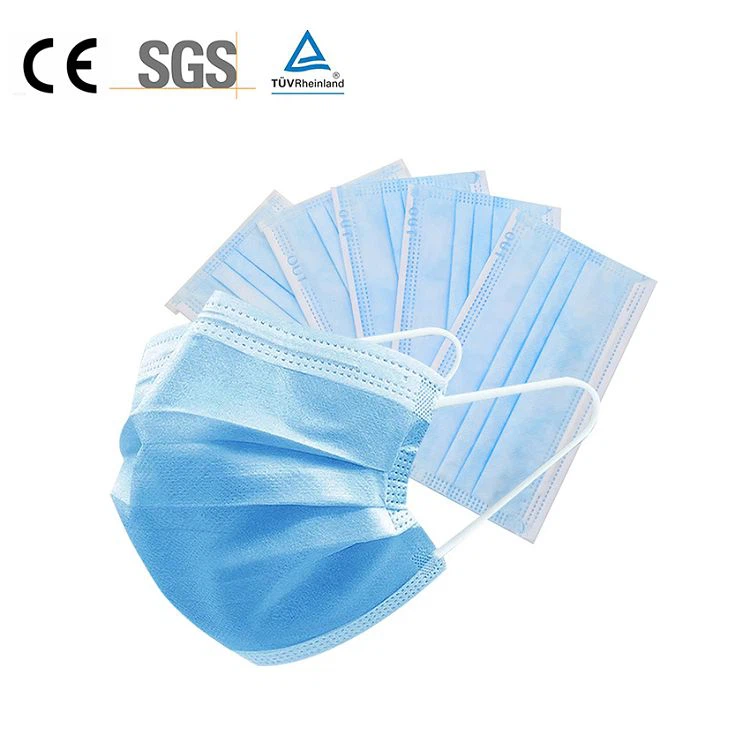
Middle Filter Layer
The middle layer is the heart of the mask's filtration system. It is typically made of a melt - blown polypropylene material. This layer is responsible for filtering out particles, including bacteria and viruses. The melt - blown fabric has a fine fiber structure that creates a maze - like path for particles. As air passes through the layer, particles are trapped by the fibers through a combination of mechanisms such as inertial impaction, interception, and diffusion. The filtration efficiency of this layer is a crucial factor in determining the mask's effectiveness. A good middle filter layer can achieve a high filtration rate, often above 95% for certain particle sizes. Our Medical Protection Face Mask is equipped with a top - notch middle filter layer to provide reliable protection.
Inner Layer
The inner layer of a CE medical face mask is made of a soft, absorbent non - woven material, usually polypropylene or a similar fiber. This layer is in direct contact with the wearer's face. Its main function is to absorb moisture, such as sweat and breath, to keep the wearer's face dry and comfortable. A comfortable inner layer encourages proper and consistent mask use. If the mask were to become wet and uncomfortable, the wearer might be tempted to adjust or remove it, reducing its effectiveness. Our Medical Disposable Face Mask has an inner layer designed for maximum comfort.
Additional Layers in Some Masks
While three - layer masks are the norm, some CE medical face masks may have additional layers for specialized purposes. For instance, there could be an additional anti - static layer to reduce the attraction of dust and other particles to the mask. Another possible additional layer is a water - resistant layer on the outer side to provide extra protection against heavy splashes. These additional layers are often found in masks designed for high - risk environments, such as surgical theaters or areas with a high prevalence of airborne pathogens.
Importance of Layer Configuration
The layer configuration of a CE medical face mask is carefully designed to balance protection, comfort, and breathability. Each layer plays a specific role, and the combination of these layers ensures that the mask can effectively filter out harmful particles while allowing the wearer to breathe easily. For example, if the outer layer was not hydrophobic, liquids could penetrate the mask and compromise the integrity of the middle filter layer. Similarly, if the inner layer was not absorbent, the mask would quickly become wet and uncomfortable, leading to improper use.
Factors Affecting Layer Performance
Several factors can affect the performance of the layers in a CE medical face mask. The quality of the materials used is of utmost importance. High - quality polypropylene materials will have better filtration efficiency, water - repellency, and absorbency. The manufacturing process also plays a crucial role. A well - made mask will have layers that are properly bonded together, ensuring that there are no gaps or weak points where particles could bypass the filtration system. Additionally, the fit of the mask on the face is essential. A poorly fitting mask can allow air to leak around the edges, reducing the overall effectiveness of the layers.
How to Choose the Right Mask
When choosing a CE medical face mask, it's important to consider the layer configuration and its intended use. For general medical settings, a standard three - layer mask will usually suffice. However, for high - risk situations, such as caring for patients with highly infectious diseases, a mask with additional layers may be necessary. Look for masks that clearly state their filtration efficiency and other performance characteristics. You can also refer to the product specifications on our website for detailed information about our Medical Face Mask, Medical Protection Face Mask, and Medical Disposable Face Mask.
Conclusion
In conclusion, CE medical face masks typically have three main layers: an outer hydrophobic layer, a middle filter layer, and an inner absorbent layer. These layers work together to provide effective protection against droplets, particles, and moisture. Some masks may have additional layers for specialized protection. The layer configuration is carefully designed to balance protection, comfort, and breathability. When choosing a mask, consider the intended use and the quality of the layers.
If you are interested in purchasing high - quality CE medical face masks, we invite you to contact us for procurement and further discussion. Our team of experts is ready to assist you in finding the right masks for your needs.
References
- European Union regulations on medical devices and face masks.
- Scientific studies on the filtration efficiency of polypropylene materials in face masks.
- Industry standards and guidelines for the manufacture of medical face masks.